
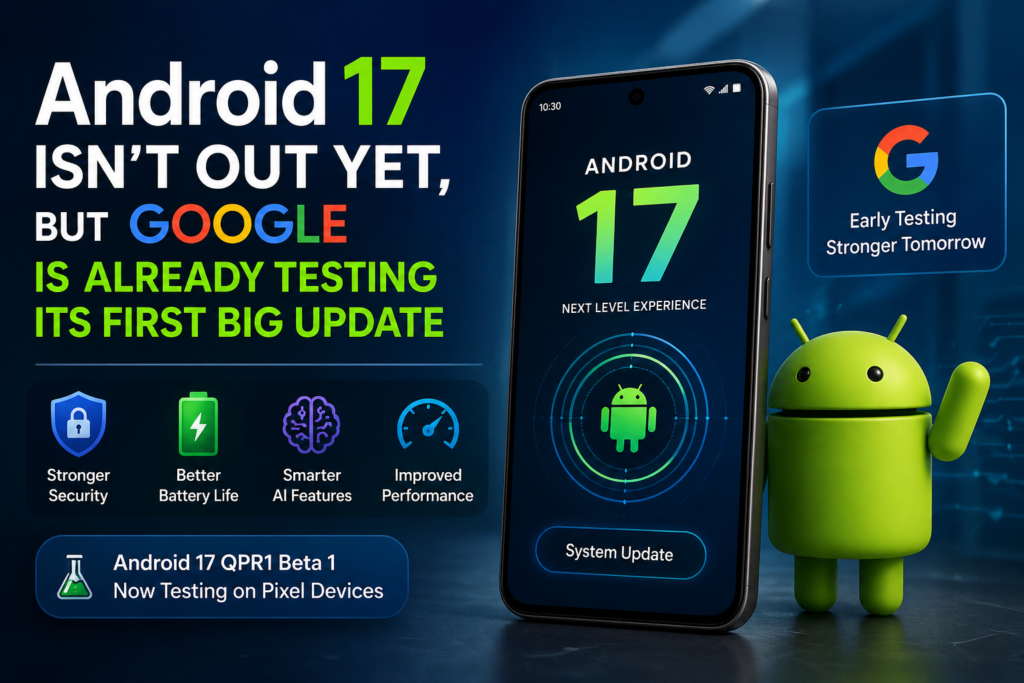


The Android 17 update is already making headlines in the U.S., even before its official release. Google has started testing its first major upgrade, signaling big improvements in performance, security, and AI-powered features.
If you’re an Android user, this update could significantly change how you use your phone daily—from smarter suggestions to better battery life.
🔍 What Is Android 17 Update?
The Android 17 update is the next version of Google’s mobile operating system, expected to roll out in 2026. It focuses on:
- AI-driven user experience
- Stronger privacy controls
- Faster performance
- Improved multitasking
👉 In simple terms: Android is becoming smarter, faster, and more secure.
🚀 Android 17 Release Date (Expected)
Google typically follows a predictable schedule:
- Developer Preview: Early 2026
- Beta Release: Mid-2026
- Stable Version: August–October 2026
👉 Pixel devices in the U.S. will likely receive the update first.
✨ Android 17 Features (What’s New)

🤖 AI-Powered Smart Features
- Smart replies in messaging apps
- Predictive app usage
- Personalized recommendations
👉 Example: Your phone suggests apps based on your routine.
🔒 Advanced Privacy Controls
- Real-time permission alerts
- Improved data protection
- Better control over app access
⚡ Faster Performance & Battery
- Reduced background activity
- Faster app loading
- Smarter battery optimization
📱 Improved Multitasking
- Enhanced split-screen
- Floating app windows
- Smooth switching
🆚 Android 17 vs Android 16 (Key Differences)
| Feature | Android 16 | Android 17 |
|---|---|---|
| AI Features | Basic | Advanced AI integration |
| Privacy | Standard | Real-time alerts |
| Performance | Good | Faster & optimized |
| Battery | Average | Smarter usage |
👉 Android 17 is a major upgrade, not just a minor update.
🔎 Hidden Features (Expected)
Some rumored features include:
- Smart automation (AI-driven actions)
- Improved voice assistant
- Advanced customization options
- Background AI learning
👉 These features aim to make your phone more “intelligent.”
📲 Supported Devices (Expected)
Google Pixel:
- Pixel 7, 8, 9 series
Samsung:
- Galaxy S23, S24, S25
Others:
- OnePlus flagship models
- Xiaomi premium devices
👉 Budget phones may not get the update.
🛠️ How to Install Android 17 Update
Step-by-Step Guide:
- Open Settings
- Tap System → Software Update
- Click Check for Updates
- Install
👉 Always use Wi-Fi and keep battery above 50%.
⚠️ Should You Update or Not?
✅ Update if:
- You want latest features
- You value security updates
- Your device supports it
❌ Wait if:
- Your phone is old
- You want bug-free experience
- You rely on stable performance
👉 Recommendation: Wait for stable release unless you’re tech-savvy.
💡 Tips Before Updating
- Backup your data
- Free up storage
- Update apps
- Charge your device
👉 This prevents data loss and errors.
❌ Common Mistakes to Avoid
- Updating with low battery
- Installing unofficial versions
- Skipping backup
📊 Pros and Cons
✅ Pros:
- Better performance
- Enhanced security
- AI features
❌ Cons:
- Not available for all devices
- Possible early bugs
📌 Key Takeaways
- Android 17 focuses on AI + performance
- Expected release: Late 2026
- Major upgrade from Android 16
- Privacy improvements are significant
📋 Quick Checklist
✔️ Check compatibility
✔️ Backup data
✔️ Use official update
✔️ Ensure battery
🔗 Internal Linking Ideas
- Best Android Phones 2026
- Top AI Apps for Android
- How to Speed Up Android
❓ FAQs
What is Android 17 update?
Android 17 is the latest Android OS with AI features and better performance.
When will Android 17 release?
Expected between August–October 2026.
Which phones will support Android 17?
Pixel, Samsung Galaxy S series, and flagship devices.
Is Android 17 worth updating?
Yes, for better security and performance.
🔥 Final Thoughts
The Android 17 update is shaping up to be one of the biggest Android upgrades in recent years. With AI-driven improvements, better privacy, and faster performance, it’s designed for modern smartphone users in the U.S.
🚀 CTA
👉 Stay updated with the latest Android news
👉 Bookmark this page
👉 Share with other Android users