

What Is AI in Business Automation?
Definition and Core Concepts
Artificial intelligence is no longer some futuristic concept reserved for Silicon Valley labs or sci-fi movies. Today, AI in business automation is actively transforming how companies operate across the United States. At its core, AI automation refers to using intelligent systems—like machine learning, natural language processing, and predictive analytics—to handle tasks that traditionally required human effort. These tasks can range from customer service and inventory management to marketing and financial forecasting.
Think of AI as a digital employee that never sleeps, never calls in sick, and constantly learns from data. For business owners, this means the ability to streamline operations, reduce overhead, and make faster, smarter decisions. For example, instead of manually tracking sales trends, AI tools can analyze thousands of transactions in seconds and suggest pricing strategies or inventory adjustments.
In practical terms, AI automation shows up in tools like chatbots that handle customer inquiries, recommendation engines that boost sales, and scheduling systems that optimize staff allocation. According to a 2024 McKinsey report, nearly 60% of U.S. businesses have already integrated some form of AI, and that number is rapidly increasing as tools become more affordable and accessible.
What makes AI especially powerful is its adaptability. Unlike traditional automation, which follows fixed rules, AI systems improve over time by learning from data patterns. This allows businesses to stay competitive in a fast-changing market without constantly reinventing their processes. For U.S. business owners looking to scale efficiently, AI is quickly becoming less of a luxury and more of a necessity.
Why AI Automation Is Growing in the U.S.
The rapid rise of AI automation in the United States isn’t happening by accident. It’s being driven by a combination of economic pressure, technological advancement, and shifting consumer expectations. One of the biggest factors is cost. Labor expenses in the U.S. continue to climb, with minimum wages increasing in many states and benefits adding additional financial strain for employers. For small and medium-sized businesses, this creates a pressing need to find smarter ways to operate.
At the same time, customers expect faster service, personalized experiences, and 24/7 availability. AI makes all of this possible without dramatically increasing costs. For example, an AI-powered chatbot can handle hundreds of customer inquiries simultaneously, something that would require an entire team of human employees.
There’s also the accessibility factor. Just a few years ago, implementing AI required a large budget and technical expertise. Today, platforms like Shopify, HubSpot, and QuickBooks offer built-in AI features that are easy to use, even for non-technical business owners. This democratization of AI technology is leveling the playing field, allowing smaller businesses to compete with larger corporations.
Government and private sector investments are also fueling growth. The U.S. has poured billions into AI research and development, while venture capital firms continue to fund AI startups at record levels. As a result, innovation is accelerating, and new tools are constantly entering the market.
All these factors combined create a perfect storm for adoption. AI is no longer optional—it’s becoming a core component of modern business strategy. And as we’ll see next, real-world examples like AI-run cafés are pushing the boundaries of what’s possible.
The AI-Run Café Concept Explained
How the Stockholm AI Café Works
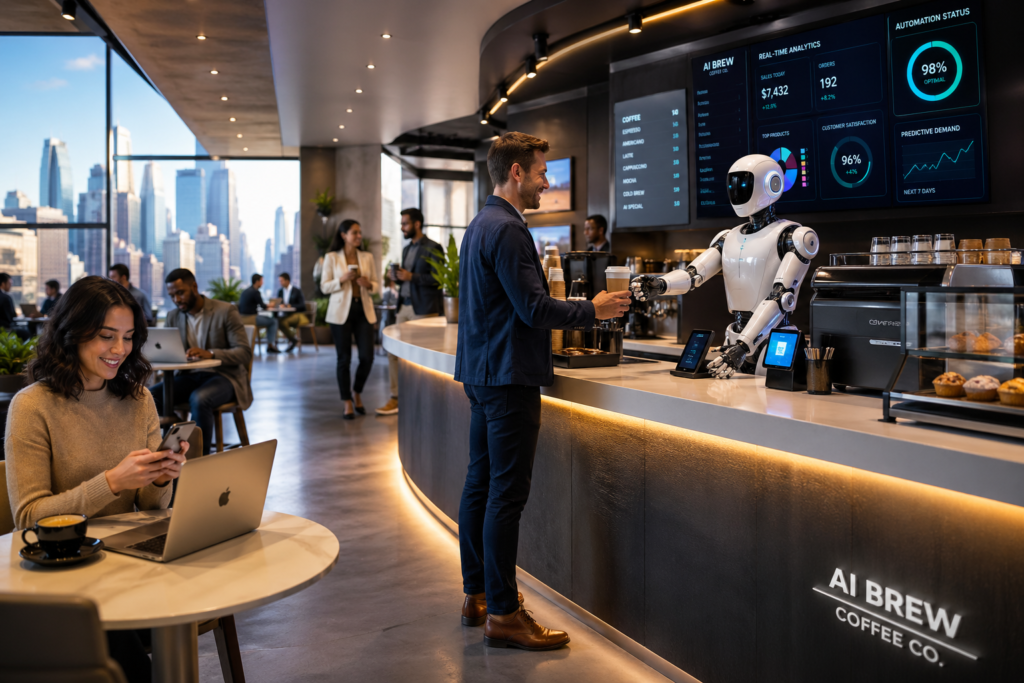
Imagine walking into a café where there’s no manager, no cashier, and no traditional staff overseeing operations. Instead, everything—from ordering to inventory management—is handled by artificial intelligence. That’s exactly what’s happening in Stockholm, where an innovative AI-run café is redefining how businesses can operate.
In this setup, customers place orders through a digital interface, often powered by AI-driven recommendation systems. These systems don’t just take orders; they analyze customer preferences, suggest items based on past behavior, and even adjust menus in real time based on demand. Behind the scenes, AI algorithms track inventory levels, predict restocking needs, and coordinate supply chain logistics without human intervention.
What’s truly fascinating is how the system adapts. For example, if a particular drink becomes popular during certain hours, the AI can automatically adjust pricing or promotions to maximize revenue. It can also optimize staffing levels—or eliminate the need for staff altogether—by predicting peak hours and streamlining operations accordingly.
This isn’t just about efficiency; it’s about creating a seamless customer experience. Orders are processed faster, errors are minimized, and personalization becomes the norm rather than the exception. For business owners in the U.S., this model offers a glimpse into a future where operations run almost autonomously, allowing entrepreneurs to focus on growth rather than day-to-day management.
While fully AI-run businesses are still emerging, elements of this model are already being adopted across the U.S. From self-checkout kiosks to AI-driven delivery systems, the foundation is already in place. The Stockholm café simply shows how far this technology can go when fully implemented.
Key Technologies Behind AI-Driven Businesses
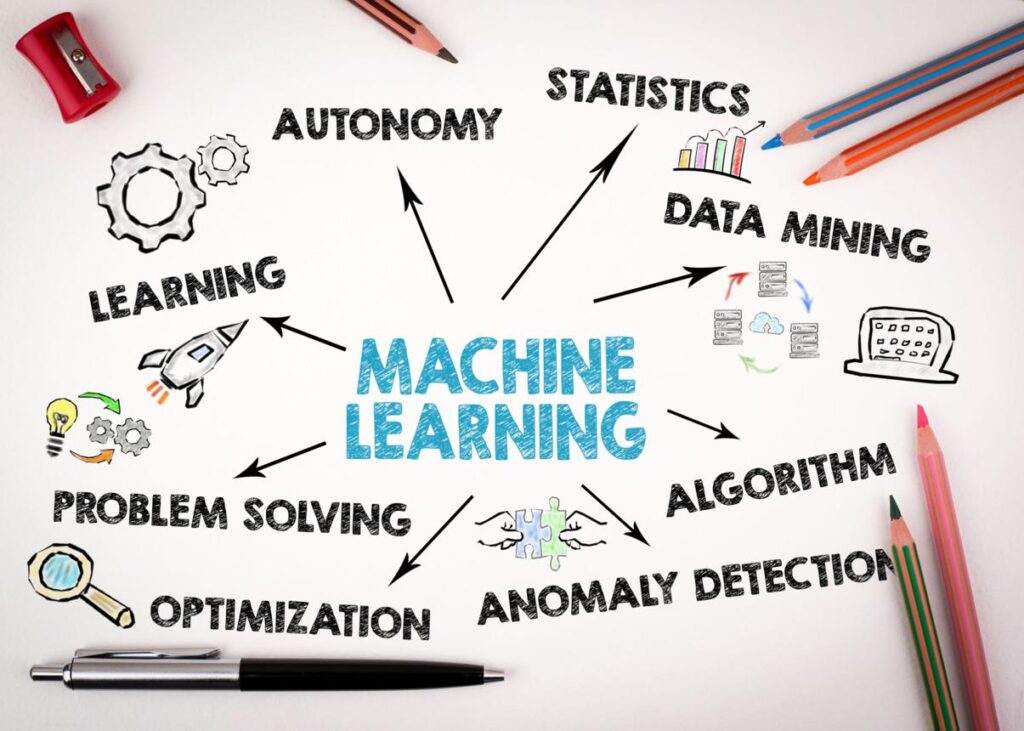
The success of an AI-run café—or any AI-driven business—relies on a combination of advanced technologies working together seamlessly. At the heart of it all is machine learning, which allows systems to analyze data, identify patterns, and improve performance over time. This is what enables AI to make accurate predictions, whether it’s forecasting demand or recommending products.
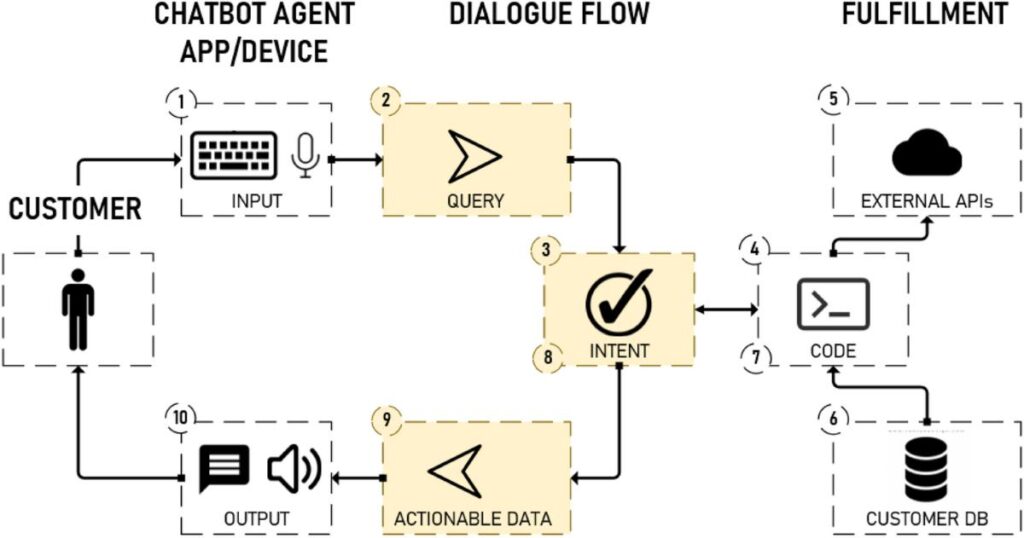
Another critical component is natural language processing (NLP). This technology powers chatbots and voice assistants, enabling businesses to interact with customers in a more human-like way. In a café setting, NLP can be used for voice ordering systems or customer support interfaces that handle inquiries without human intervention.
Computer vision is also playing an increasingly important role. This technology allows systems to interpret visual data, such as recognizing products, monitoring inventory, or even analyzing customer behavior within a physical space. For example, cameras equipped with AI can track which items are being picked up most frequently and adjust inventory accordingly.
Cloud computing ties everything together by providing the infrastructure needed to process and store massive amounts of data. Platforms like AWS, Google Cloud, and Microsoft Azure make it possible for businesses of all sizes to leverage AI without investing in expensive hardware.
Finally, predictive analytics transforms raw data into actionable insights. This allows business owners to anticipate trends, optimize pricing strategies, and make informed decisions that drive profitability.
For U.S. business owners, the takeaway is clear: you don’t need to build these systems from scratch. Many AI tools already integrate these technologies into user-friendly platforms, making it easier than ever to bring automation into your business.
Why Business Owners Should Care About AI Automation
Rising Labor Costs in the U.S.
If you’re running a business in the United States right now, you’ve probably felt the squeeze—labor costs are climbing, and it’s not slowing down anytime soon. From higher minimum wages in states like California and New York to increased expectations around employee benefits, the cost of maintaining a workforce has become one of the biggest challenges for business owners. According to the U.S. Bureau of Labor Statistics, average hourly earnings have steadily increased year over year, putting pressure on profit margins, especially for small and mid-sized businesses.
This is where AI in business automation becomes more than just a trend—it becomes a survival strategy. Instead of relying solely on human labor for repetitive tasks like order processing, customer inquiries, scheduling, or inventory tracking, AI systems can handle these functions at a fraction of the cost. Think about it: an AI chatbot can manage hundreds of customer conversations simultaneously, something that would require multiple employees working in shifts.
But it’s not just about cutting costs—it’s about reallocating resources. When AI takes over repetitive tasks, your human employees can focus on higher-value work like building customer relationships, improving products, or developing new revenue streams. This shift doesn’t eliminate jobs; it transforms them into more strategic roles.
There’s also the issue of labor shortages. Many U.S. industries, especially hospitality and retail, are struggling to find and retain workers. AI helps bridge that gap by ensuring operations continue smoothly even when staffing is limited. For example, an AI-powered ordering system in a café can reduce the need for front-of-house staff while maintaining fast service.
For business owners, the question isn’t whether labor costs will continue to rise—they will. The real question is how you adapt. AI automation offers a practical, scalable solution that not only reduces expenses but also positions your business for long-term growth in an increasingly competitive market.
Efficiency and Scalability Benefits
Running a business often feels like spinning plates—you’re juggling operations, marketing, customer service, and finances all at once. Now imagine having a system that keeps those plates spinning smoothly, without constant manual intervention. That’s exactly what AI automation brings to the table: unmatched efficiency and scalability.
Efficiency starts with speed. AI systems can process data, execute tasks, and make decisions in seconds. For example, instead of manually analyzing weekly sales reports, an AI tool can instantly identify trends, flag issues, and suggest actionable improvements. This allows you to respond to changes in real time rather than reacting after the fact.
Then there’s consistency. Humans make mistakes—it’s natural. But AI systems follow precise algorithms, reducing errors in tasks like order processing, billing, and inventory management. This leads to smoother operations and a better customer experience. Imagine a café where every order is accurate, every time, without delays or confusion. That level of consistency builds trust and loyalty.
Scalability is where AI truly shines. Traditional business growth often requires hiring more staff, increasing overhead, and managing more complexity. With AI, you can scale operations without a proportional increase in costs. For instance, an online store using AI-driven customer support can handle a surge in traffic during holiday seasons without needing to hire additional support agents.
Here’s a quick comparison to illustrate the impact:
| Factor | Traditional Business | AI-Driven Business |
| Customer Support | Limited by staff availability | 24/7 automated support |
| Data Analysis | Manual and time-consuming | Instant and predictive |
| Scalability | Requires more hiring | Scales with minimal cost |
| Error Rate | Higher due to human factors | Significantly reduced |
For U.S. business owners aiming to grow, this is a game-changer. AI doesn’t just help you do things faster—it allows you to do more with less, creating a leaner, more agile operation that can adapt to market demands effortlessly.
Key Benefits of AI in Business Automation
Cost Reduction
Let’s talk numbers, because at the end of the day, every business decision comes down to the bottom line. One of the most compelling reasons to adopt AI in business automation is its ability to significantly reduce costs. And we’re not just talking about small savings—we’re talking about potentially thousands, even millions, of dollars over time.
First, there’s the reduction in labor expenses. AI systems can handle tasks that would otherwise require multiple employees, from customer service to data entry. For example, implementing an AI chatbot can reduce customer support costs by up to 30%, according to IBM. That’s a substantial saving, especially for businesses operating on tight margins.
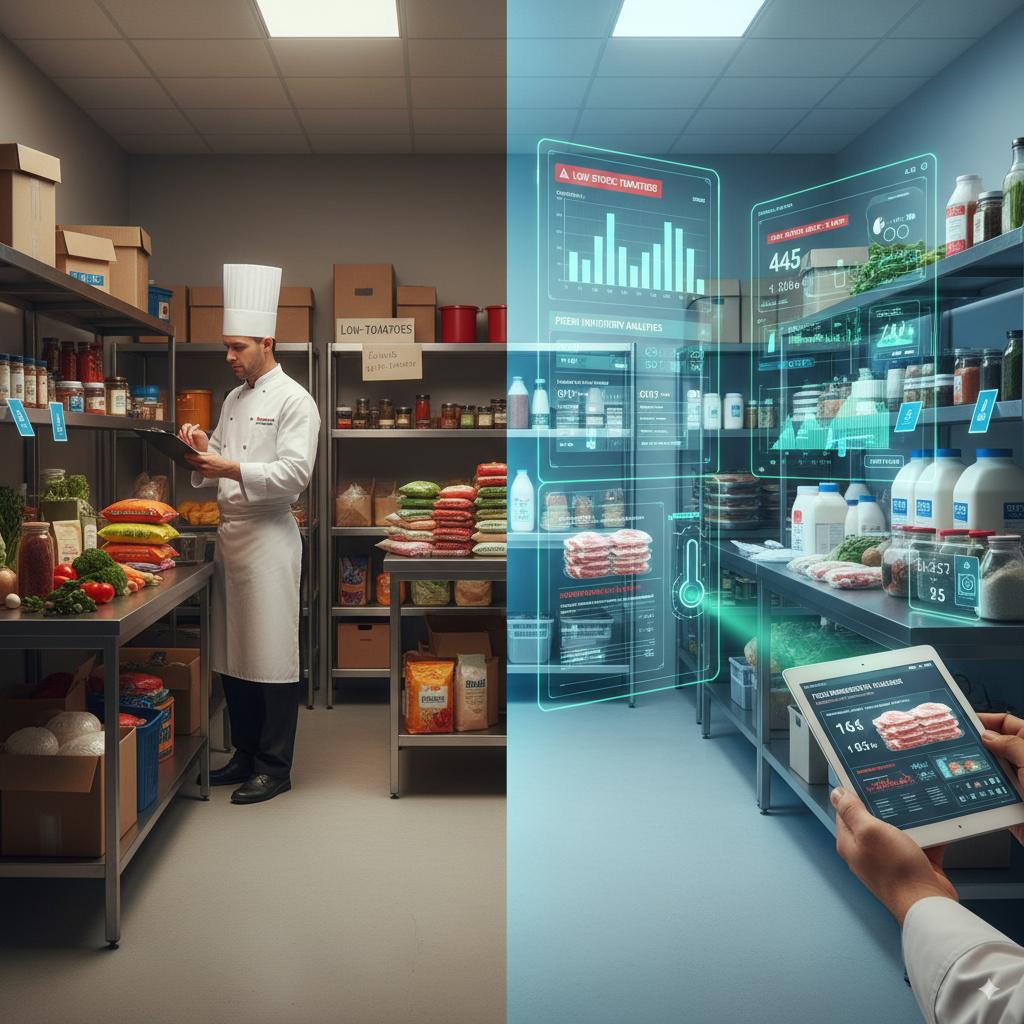
Then there are operational efficiencies. AI can optimize processes like inventory management, ensuring you’re not overstocking or understocking products. This reduces waste and improves cash flow. In a café setting, this could mean automatically adjusting ingredient orders based on demand forecasts, preventing spoilage and saving money.
Energy efficiency is another often-overlooked benefit. AI systems can monitor and optimize energy usage in real time, reducing utility bills. For businesses with physical locations, this can lead to noticeable savings over time.
What makes AI particularly appealing is its scalability. Once implemented, the cost of running AI systems doesn’t increase significantly as your business grows. This means your profit margins can improve as you scale, rather than being eaten up by rising operational costs.
For U.S. business owners, where expenses can quickly add up, AI offers a way to stay competitive without constantly cutting corners. It’s not about replacing people—it’s about building a smarter, more cost-effective operation.
Improved Customer Experience
Customers in the U.S. have high expectations—and they’re only getting higher. They want fast service, personalized interactions, and seamless experiences across all touchpoints. Meeting these expectations consistently can be challenging, but this is where AI truly excels.
AI-powered systems can analyze customer behavior and preferences to deliver highly personalized experiences. For example, in an AI-run café, the system might remember a customer’s favorite drink and suggest it the next time they visit. This level of personalization makes customers feel valued and understood, which can significantly boost loyalty.
Speed is another critical factor. AI systems can process orders, respond to inquiries, and resolve issues almost instantly. This reduces wait times and improves overall satisfaction. In a world where people expect instant gratification, this can be a major competitive advantage.
Consistency also plays a huge role. Unlike human employees, AI systems deliver the same level of service every time. There are no bad days, no miscommunications, and no variability in performance. This reliability builds trust with customers, encouraging repeat business.
AI can also enhance the customer journey by providing proactive support. For instance, predictive analytics can identify potential issues before they arise and offer solutions in advance. Imagine receiving a notification about a delayed order along with a discount for your next purchase—that’s the kind of experience that turns customers into loyal advocates.
For business owners, the takeaway is simple: better customer experience leads to higher retention, more referrals, and increased revenue. AI makes it easier to deliver that experience consistently, without overburdening your team.
Data-Driven Decision Making
One of the most underrated advantages of AI in business automation is its ability to transform raw data into clear, actionable decisions. Most businesses today collect massive amounts of data—sales figures, customer behavior, website analytics, and more—but the real challenge lies in making sense of it all. That’s where AI steps in and changes the game entirely.
Instead of guessing what might work, AI allows you to make decisions based on real-time insights. For example, an AI system can analyze purchasing patterns and tell you exactly which products are selling best, at what times, and to which customer segments. This level of insight enables you to fine-tune your pricing, promotions, and inventory strategies with precision. According to a Deloitte study, data-driven businesses are 23 times more likely to acquire customers and 6 times more likely to retain them—a statistic that clearly shows the power of informed decision-making.
AI also helps eliminate human bias. When making decisions manually, it’s easy to rely on gut feelings or past experiences, which may not always reflect current market conditions. AI, on the other hand, relies purely on data and patterns, ensuring more objective and accurate outcomes. For instance, in an AI-run café, pricing adjustments aren’t based on assumptions—they’re driven by actual demand, customer behavior, and external factors like weather or local events.
Another key benefit is predictive capability. AI doesn’t just tell you what’s happening now—it forecasts what’s likely to happen next. This allows business owners to stay ahead of trends rather than reacting to them. Imagine knowing in advance which products will be in high demand next month or identifying potential supply chain disruptions before they occur. That’s the kind of advantage that can set your business apart in a competitive U.S. market.
For business owners, this means fewer risks, smarter investments, and better overall performance. Instead of operating in uncertainty, you’re running your business with clarity and confidence—backed by data that’s constantly learning and evolving.
Real-Life Examples of AI in Business
AI in Retail and Restaurants
AI is already making a noticeable impact across retail and restaurant industries in the United States, and the results are hard to ignore. From major chains to local businesses, companies are using AI in business automation to streamline operations and enhance customer experiences in ways that were unimaginable just a few years ago.
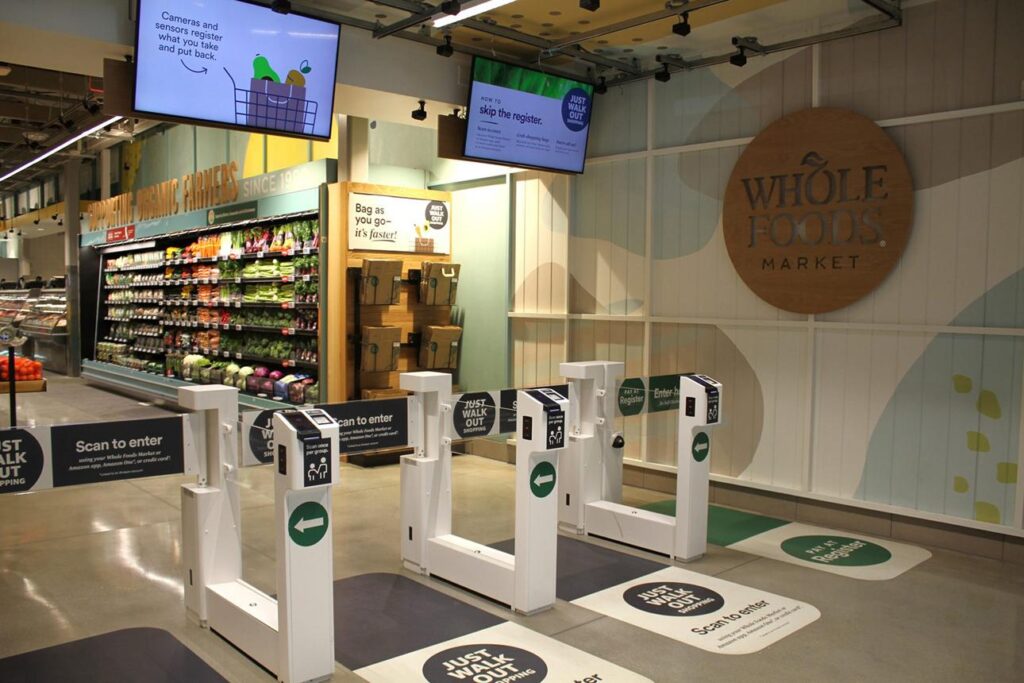
Take Amazon, for example. Its “Just Walk Out” technology allows customers to enter a store, pick up items, and leave without ever going through a checkout line. AI systems track what customers take and automatically charge their accounts. This eliminates long lines and creates a frictionless shopping experience—something every retailer aims to achieve.
In the restaurant industry, brands like McDonald’s and Starbucks are leveraging AI for personalization and efficiency. McDonald’s uses AI-driven digital menus that change based on factors like time of day, weather, and trending items. Starbucks, on the other hand, uses AI to analyze customer preferences and recommend drinks through its mobile app, increasing upsell opportunities.
Even smaller restaurants are adopting AI tools for inventory management and demand forecasting. For example, AI can predict how many customers will visit on a given day and adjust ingredient orders accordingly. This reduces waste and ensures that popular items are always in stock.
Here’s a quick snapshot of how AI is being used:
| Industry | AI Application | Benefit |
| Retail | Automated checkout | Faster transactions |
| Restaurants | AI-driven menus | Increased sales |
| E-commerce | Product recommendations | Higher conversions |
| Food Service | Inventory forecasting | Reduced waste |
For U.S. business owners, these examples show that AI isn’t just for tech giants—it’s accessible and scalable for businesses of all sizes.
AI in Small Businesses
If you think AI is only for big corporations with massive budgets, think again. Small businesses across the U.S. are increasingly adopting AI automation tools to compete more effectively—and in many cases, outperform larger competitors.
Consider a small online boutique using AI-powered email marketing tools. These systems can segment customers, personalize messages, and send campaigns at optimal times, leading to higher open rates and conversions. What used to require a dedicated marketing team can now be handled by a single business owner with the help of AI.
Another example is local service businesses, such as HVAC companies or salons, using AI scheduling tools. These tools automatically manage appointments, send reminders, and even reschedule bookings based on availability. This reduces no-shows and improves overall efficiency.
AI is also transforming accounting and finance for small businesses. Platforms like QuickBooks and Xero use AI to categorize expenses, detect anomalies, and generate financial reports. This not only saves time but also reduces the risk of costly errors.
Perhaps the most impactful use of AI for small businesses is customer support. AI chatbots can handle common inquiries 24/7, ensuring customers always receive timely responses. This is especially valuable for businesses that can’t afford a full-time support team.
The key takeaway? AI levels the playing field. It allows small businesses to operate with the efficiency and sophistication of much larger organizations—without the same level of investment.
Step-by-Step Guide to Implement AI in Your Business
Identify Automation Opportunities
Before jumping into AI tools, the first step is identifying where automation can make the biggest impact. Not every part of your business needs AI, and trying to automate everything at once can lead to unnecessary complexity. Instead, focus on areas that are repetitive, time-consuming, and prone to human error.
Start by analyzing your daily operations. Where are you or your team spending the most time? Common areas include customer service, data entry, scheduling, and inventory management. These are prime candidates for automation because they follow predictable patterns that AI can easily handle.
It’s also important to consider customer-facing processes. For example, if your business receives a high volume of inquiries, implementing an AI chatbot can significantly improve response times and customer satisfaction. Similarly, if you’re running an e-commerce store, AI-driven recommendation engines can boost sales by suggesting relevant products.
Another useful approach is to track bottlenecks. Where do delays typically occur? These pain points often indicate opportunities for automation. For instance, if order processing is slowing down your operations, an AI system can streamline the workflow and reduce turnaround times.
By clearly identifying these opportunities, you ensure that your investment in AI delivers maximum value. It’s not about using AI for the sake of it—it’s about solving real problems and improving efficiency where it matters most.
Choose the Right AI Tools

Once you’ve identified where AI can help, the next step is choosing the right tools. This can feel overwhelming given the number of options available, but the key is to focus on solutions that align with your specific needs and budget.
For customer service, tools like ChatGPT-based chatbots, Intercom, or Drift are popular choices. For marketing, platforms like HubSpot and Mailchimp offer AI-driven features for email campaigns and customer segmentation. If you’re in retail or e-commerce, Shopify’s AI tools can help with product recommendations and inventory management.
Here’s a simple checklist to guide your selection:
- Does the tool solve a specific problem in your business?
- Is it easy to integrate with your existing systems?
- Does it offer scalability as your business grows?
- Is the pricing reasonable (monthly or annual in $)?
It’s also a good idea to start small. Instead of implementing multiple AI tools at once, begin with one or two that address your most pressing needs. This allows you to test their effectiveness and make adjustments before expanding further.
Remember, the goal isn’t to adopt the most advanced technology—it’s to find practical solutions that deliver real results.
Implement and Optimize
Implementing AI isn’t a one-and-done process—it requires ongoing monitoring and optimization. Once you’ve selected your tools, the next step is integrating them into your workflow and ensuring your team knows how to use them effectively.
Start with a pilot phase. Test the AI system on a small scale to identify any issues or areas for improvement. For example, if you’re внедр implementing a chatbot, monitor how it handles customer inquiries and adjust its responses as needed.
Training is also crucial. While AI systems are designed to be user-friendly, your team still needs to understand how to interact with them and interpret the data they provide. This ensures you’re getting the most out of your investment.
Over time, analyze performance metrics. Are you seeing improvements in efficiency, cost savings, or customer satisfaction? Use this data to refine your approach and expand AI usage into other areas of your business.
AI thrives on data, so the more you use it, the better it becomes. By continuously optimizing your systems, you create a cycle of improvement that drives long-term success.
Pros and Cons of AI Business Automation
Adopting AI in business automation can feel like unlocking a superpower for your company—but like any powerful tool, it comes with both advantages and trade-offs. Understanding both sides helps you make smarter, more strategic decisions instead of jumping in blindly.
Let’s start with the positives. One of the biggest advantages is efficiency. AI systems can operate 24/7 without breaks, handling repetitive tasks faster and more accurately than humans. This leads to significant cost savings, especially in areas like customer support, data processing, and inventory management. Another major benefit is scalability. Whether you’re serving 10 customers or 10,000, AI systems can handle increased demand without requiring proportional increases in staffing or infrastructure.
AI also improves decision-making. With access to real-time data and predictive analytics, business owners can make informed choices that reduce risk and increase profitability. And let’s not forget customer experience—AI enables personalization at scale, something that’s incredibly difficult to achieve manually.
However, there are challenges to consider. Initial setup costs can be a barrier, especially for small businesses. While many tools are affordable, implementing a full AI system may require upfront investment. There’s also a learning curve. Business owners and teams need time to understand how to use these tools effectively.
Another concern is over-reliance. If businesses depend too heavily on AI without human oversight, mistakes or system errors can go unnoticed. And finally, there’s the human factor—some customers still prefer interacting with real people, especially in service-based industries.
Here’s a quick breakdown:
| Pros | Cons |
| Cost savings | Initial investment |
| 24/7 operations | Learning curve |
| Scalability | Over-reliance risks |
| Better decisions | Less human touch |
The key is balance. AI should enhance your business—not completely replace the human element that builds trust and connection.
Common Mistakes to Avoid When Using AI
Jumping into AI without a clear plan can lead to wasted time, money, and frustration. Many U.S. business owners make avoidable mistakes when adopting AI in business automation, and recognizing these pitfalls early can save you a lot of trouble.
One of the most common mistakes is trying to automate everything at once. It’s tempting to go all-in, but this often leads to complexity and confusion. Instead, start small and focus on one or two high-impact areas. This allows you to test, learn, and scale gradually.
Another mistake is choosing the wrong tools. Not all AI solutions are created equal, and picking a tool just because it’s popular can backfire. Always align your choice with your specific business needs. A restaurant, for example, will benefit more from inventory and ordering automation than from advanced financial forecasting tools.
Ignoring data quality is another major issue. AI systems rely on data to function effectively. If your data is outdated, incomplete, or inaccurate, the results will be flawed. Think of it like cooking with bad ingredients—you can’t expect a great outcome.
Some businesses also fail to train their teams properly. Even the best AI tools won’t deliver results if your team doesn’t know how to use them. Investing in training ensures smoother adoption and better outcomes.
Finally, don’t forget the human touch. Over-automating customer interactions can make your business feel impersonal. The goal is to enhance relationships, not replace them.
Avoiding these mistakes puts you ahead of most competitors who are still figuring things out.
Actionable Tips for Business Owners
If you’re ready to start leveraging AI in business automation, the best approach is to focus on practical, actionable steps that deliver immediate value. You don’t need to overhaul your entire business overnight—small, strategic changes can make a big difference.
Start by automating customer communication. Implement a chatbot on your website or social media platforms to handle common questions. This alone can free up hours of your time each week. Next, look at your marketing efforts. AI tools can optimize email campaigns, suggest content ideas, and even automate social media posting.
Another high-impact area is sales. Use AI-powered CRM systems to track leads, predict customer behavior, and identify opportunities for upselling. This helps you close more deals without increasing your workload.
Here’s a quick checklist you can follow:
- Automate repetitive tasks first
- Use AI for customer insights
- Start with affordable tools
- Monitor performance regularly
- Scale gradually based on results
Also, don’t underestimate the power of integration. Many AI tools work better when connected. For example, linking your CRM with your email marketing platform creates a seamless flow of data, improving efficiency across the board.
For U.S. business owners, the goal is simple: work smarter, not harder. AI gives you the tools to do exactly that.
Key Takeaways
If you’ve made it this far, you’re already ahead of many business owners who are still unsure about AI. Let’s break down the most important points so you can walk away with clarity and direction.
- AI in business automation is no longer optional—it’s becoming essential for staying competitive in the U.S. market.
- Rising labor costs and customer expectations are driving rapid adoption across industries.
- Real-world examples, like AI-run cafés and automated retail stores, show what’s possible today.
- AI improves efficiency, reduces costs, and enhances customer experience simultaneously.
- Small businesses can benefit just as much as large corporations by using accessible AI tools.
- Success with AI comes from starting small, choosing the right tools, and continuously optimizing.
The bottom line? AI isn’t replacing business owners—it’s empowering them to do more with less effort and greater precision.
Conclusion
The rise of AI in business automation marks a turning point in how businesses operate, compete, and grow. What once seemed like a futuristic concept is now a practical, accessible solution that’s reshaping industries across the United States. From AI-run cafés in Stockholm to automated retail stores and smart marketing systems, the message is clear: the future of business is intelligent, data-driven, and increasingly autonomous.
For business owners, this presents both an opportunity and a challenge. The opportunity lies in leveraging AI to reduce costs, improve efficiency, and deliver exceptional customer experiences. The challenge is adapting quickly enough to stay ahead of competitors who are already embracing these technologies.
The good news? You don’t need to be a tech expert or have a massive budget to get started. With the wide range of AI tools available today, even small businesses can implement powerful automation strategies and see immediate results.
So the real question is: are you ready to let AI take your business to the next level?
FAQs (People Also Ask Optimization)
1. What is AI in business automation?
AI in business automation refers to using artificial intelligence technologies to perform tasks like customer service, data analysis, and inventory management without human intervention.
2. How can small businesses use AI?
Small businesses can use AI for chatbots, email marketing, scheduling, accounting, and customer insights to improve efficiency and reduce costs.
3. Is AI expensive for small businesses in the U.S.?
Not necessarily. Many AI tools offer affordable monthly pricing (often under $50–$200), making them accessible for small businesses.
4. What industries benefit most from AI automation?
Retail, restaurants, healthcare, finance, and e-commerce are among the top industries benefiting from AI.
5. Can AI completely replace employees?
No. AI is best used to handle repetitive tasks, allowing employees to focus on strategic and creative work.