
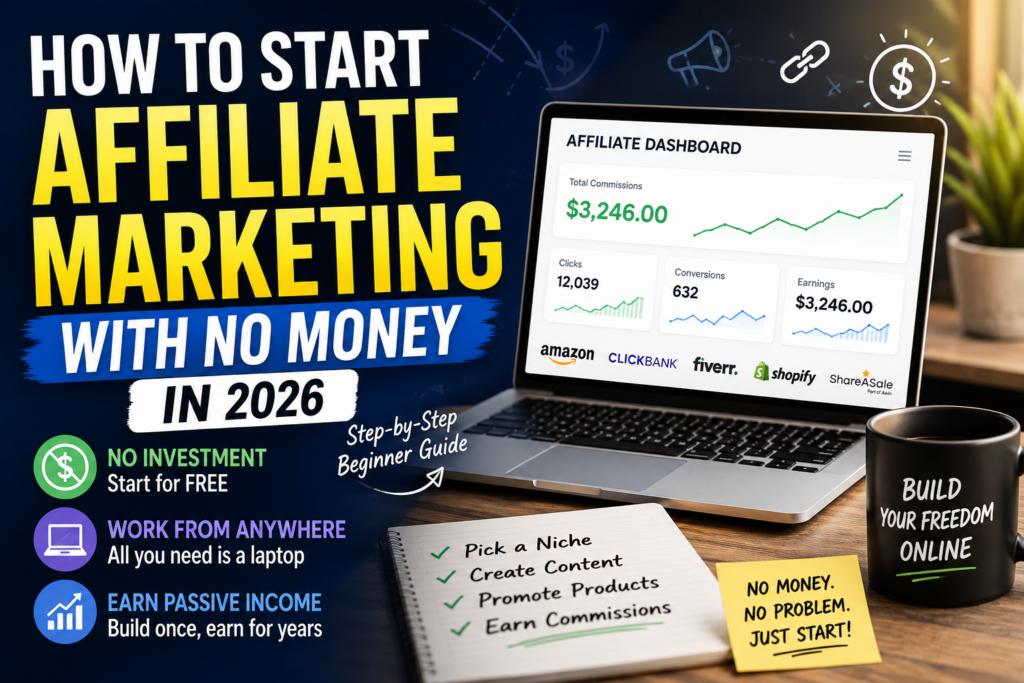

The Reality of Starting From Scratch
Most people don’t search “how to start affiliate marketing with no money” because life is running perfectly.
Usually, there’s something behind the search. Rent feels heavier than it did two years ago. Groceries somehow cost more every month. Maybe you’ve watched people online casually mention affiliate commissions and thought, Wait… are regular people actually making money doing this?
Fair question.
And honestly, affiliate marketing is one of the few online business models where someone can genuinely begin without spending much upfront. No inventory. No shipping headaches. No customer support emails at 2 a.m. You don’t need a warehouse or a fancy office setup with neon lights in the background.
You mostly need three things:
- a phone or laptop
- internet access
- enough patience to keep going when nobody’s paying attention yet
That last part trips people up.
A lot of beginners imagine affiliate marketing as quick money because social media tends to highlight the “I made $10,000 this month” screenshots, not the six months someone spent posting videos that got 38 views. Realistically, affiliate marketing behaves more like planting seeds than hitting a jackpot. At first, it feels slow. Almost suspiciously slow. Then one useful post starts ranking, another video gets shared, and momentum gradually builds.
And right now, there’s a real opportunity window.
Affiliate marketing spending continues growing globally, with brands pouring billions into partnerships because recommendations convert better than cold ads. Consumers trust creators, reviewers, niche experts, and even random relatable people online more than polished corporate campaigns. A few years ago people searched Google for everything. Now plenty of users type questions directly into TikTok, YouTube, Reddit, or even ChatGPT looking for product recommendations from humans who actually used something.
That shift matters.
You don’t need celebrity status anymore. You just need useful content and consistency.
What Affiliate Marketing Actually Is
At its core, affiliate marketing is simple.
You recommend a product or service using a unique referral link. If somebody clicks that link and buys something, you earn a commission.
That’s it.
Think of it like digital word-of-mouth.
For example:
You post a short TikTok reviewing a budgeting app. Someone watches it during their lunch break, downloads the app using your link, subscribes, and you earn a percentage of the sale.
Companies like this system because they only pay when results happen. Creators like it because they don’t have to build products themselves.
Some of the biggest affiliate platforms include:


Not all affiliate programs pay equally, though.
Physical products usually pay smaller commissions. Software tools, subscriptions, and business services often pay far more — sometimes recurring monthly income instead of a one-time payout. That’s why so many creators in the productivity, AI, and business space focus heavily on software recommendations.
Why So Many Beginners Start Here
Compared to almost every other side hustle, affiliate marketing has an unusually low barrier to entry.
Opening a restaurant? Massive startup costs.
Launching an ecommerce brand? Inventory, suppliers, shipping, returns.
Freelancing? You still need clients.
Affiliate marketing strips away most of that complexity.
You can start anonymously. Work from your bedroom. Test content ideas for free. Learn publicly while improving over time.
And honestly, short-form content changed the game completely.
Five years ago people thought you needed a polished blog and expensive gear. Now somebody with a decent phone camera can post a 30-second product comparison on TikTok and accidentally reach 200,000 views overnight.
Not because production quality is incredible.
Because the content feels real.
People are exhausted by overproduced marketing. They trust relatable creators more than perfect-looking ads. That’s why “I tested this for a week” videos often outperform highly polished commercials.
There’s something oddly powerful about authenticity online right now.
Step-by-Step: Starting Affiliate Marketing With No Money
1. Pick a Niche You Can Actually Stick With
This sounds basic, but it matters more than people realize.
Your niche is simply the topic you’ll consistently create content around. The mistake beginners make is chasing whatever looks profitable instead of choosing something they can realistically talk about for months without getting bored.
The sweet spot is usually:
Good beginner niches include:


- personal finance
- fitness
- tech
- gaming
- beauty
- productivity
- parenting
- home organization
- AI tools
- online business
The best niche usually combines:
something you care about + something people actively search for + something with affiliate products attached
For example, someone into fitness could promote:
- workout apps
- supplements
- gym gear
- meal planning tools
- online coaching programs
A niche gives your content direction. Without one, your account starts looking random. Algorithms hate random.
People do too.
2. Join Beginner-Friendly Affiliate Programs
Once you’ve chosen your niche, sign up for a couple affiliate programs connected to that audience.
And genuinely — keep it simple at first.
A lot of beginners collect affiliate programs like Pokémon cards and never create actual content. You do not need 14 dashboards open on day one.
Start with one or two.
Some beginner-friendly options:
Beginner-Friendly Programs
| Program | Best For | Cost |
|---|---|---|
| Amazon Associates | Physical products | Free |
| ClickBank | Digital products | Free |
| Fiverr Affiliates | Freelance services | Free |
| Shopify Affiliates | Business tools | Free |
| ShareASale | Multiple brands | Free |
One thing experienced affiliates learn quickly: fake enthusiasm destroys trust.
If every recommendation feels forced, people sense it instantly. Online audiences are surprisingly good at detecting when somebody is pushing products purely for commission.
The creators who last are usually recommending tools they’d probably mention anyway
Affiliate Platforms


3. Use Free Traffic Instead of Paid Ads
This is where the “no money” part actually works.
Instead of buying ads, beginners rely on organic traffic.
And in 2026, there are more free traffic opportunities than ever.
TikTok
Still one of the fastest ways to get attention organically. Product demos, tool reviews, “things I wish I knew earlier” videos — those formats work incredibly well.
YouTube
YouTube Shorts continues rewarding educational and searchable content. One decent tutorial can keep pulling views months later.
Underrated for affiliate traffic. Pinterest behaves more like a search engine than social media, which means pins can survive far longer than Instagram posts.
Medium
Useful for SEO-focused articles without paying for a blog upfront.
Works best if you contribute naturally instead of dropping links everywhere like a spam bot from 2012.
Still strong for short educational content and product recommendations.
The biggest rookie mistake?
Trying to dominate every platform simultaneously.
That usually ends with burnout after two weeks.
Pick one platform. Learn how content behaves there. Improve gradually. Expand later.


4. Stop “Selling” and Start Helping
The best affiliate content doesn’t feel like an advertisement.
The affiliate content that performs best rarely feels like advertising.
It feels useful.
Instead of saying:
“Buy this productivity app.”
Try:
“I tested five productivity apps while juggling freelance work and this was the only one I actually kept using.”
See the difference?
One feels transactional. The other feels human.
Good affiliate content usually falls into categories like:
- tutorials
- comparisons
- beginner mistakes
- “best tools for…” lists
- honest reviews
- case studies
- walkthroughs
People respond to experiences and observations more than generic claims.
That’s why smaller creators often outperform larger polished accounts. They sound believable.
Mistakes That Quietly Kill Most Beginners
Expecting Fast Money
This one hurts because social media constantly compresses timelines.
Someone posts a screenshot showing affiliate income, but conveniently skips the part where they uploaded 180 videos before anything happened.
Most beginners earn little at first.
That’s normal..
Spamming Affiliate Links Everywhere
Reddit comments. Facebook groups. Random DMs.
It almost never works long-term.
Trust is the real currency in affiliate marketing.
Copying Other Creators Too Closely
Inspiration is fine. Cloning isn’t.
Audiences reward personality more than perfection now.
Constantly Switching Niches
One week fitness.
Next week crypto.
Then AI tools.
This confuses both audiences and algorithms.
Quitting Right Before Momentum Starts
This happens constantly.
Someone posts consistently for three months, sees modest results, quits… right before their older content begins compounding.
Affiliate marketing often feels invisible until suddenly it doesn’t.
Free Tools That Actually Help


You don’t need expensive software subscriptions immediately.
Some free tools beginners commonly use:
| Tool | Purpose |
|---|---|
| Canva | Graphics & thumbnails |
| ChatGPT | Brainstorming & scripting |
| CapCut | Video editing |
| Research | |
| Notion | Content planning |
AI tools now help creators produce content faster, but audiences still connect most with human stories and real experiences.
How Long Until You Actually Make Money?
Probably longer than TikTok gurus claim.
Realistically:
| Timeline | Expected Progress |
|---|---|
| 3–6 Months | Build audience & traffic |
| 6–12 Months | Consistent commissions |
| 1–2 Years | Strong long-term income |
Some people succeed faster because they improve quickly. Others stay stuck because they keep restarting from zero.
Affiliate marketing compounds like a snowball.
At first it feels painfully small. Then old videos continue getting views while new content stacks on top. One helpful tutorial can quietly generate clicks for years.
That’s the part many people underestimate.
Unlike hourly side hustles, content keeps working after you log off.
Final Thoughts
Learning how to start affiliate marketing with no money in 2026 isn’t really about discovering hidden tricks.
It’s mostly about becoming useful online.
The barrier to entry has never been lower, but attention has never been more competitive either. People don’t need another generic creator recycling advice they barely understand. They want honesty. Clarity. Recommendations that feel earned.
The encouraging part is that beginners still break through constantly.
Not because they’re famous.
Because they consistently publish content that helps somebody solve a problem.
And honestly, that’s probably the healthiest way to think about affiliate marketing anyway.
Less “How fast can I make money?”
More:
“How can I become genuinely valuable to a specific audience over time?”
That mindset tends to survive longer — and ironically, usually earns more too.
Quick Checklist for Beginners
Before starting, make sure you:
- Choose one niche
- Join 1–2 affiliate programs
- Pick one content platform
- Create content consistently
- Learn basic SEO
- Focus on helping people
- Track what content performs best
- Stay patient during slow growth periods
Simple execution beats endless planning.
Conclusion
Learning how to start affiliate marketing with no money is less about secret tactics and more about consistent digital communication. The opportunity is real, but so is the effort required.
You do not need expensive courses, paid ads, or professional equipment to begin. What matters most is your ability to provide useful content people genuinely trust.
The internet rewards creators who solve problems clearly and consistently.
Right now, millions of Americans are searching for better income opportunities, flexible side hustles, and online business models with low risk. Affiliate marketing remains one of the few paths where someone can begin with almost nothing except time, curiosity, and persistence.
The hardest part isn’t starting.
It’s continuing long enough for the results to finally catch up.
FAQs
Can I start affiliate marketing without a website?
Yes. Many beginners use TikTok, YouTube Shorts, Instagram, Pinterest, and Medium instead of websites initially.
Which affiliate program is best for beginners?
Amazon Associates is beginner-friendly, while ClickBank and Fiverr Affiliates often offer higher commissions.
How much money can beginners make?
Some beginners earn their first commissions within months, while larger incomes usually require consistent effort over time.
Is affiliate marketing saturated in 2025?
Competition exists, but new creators still succeed because audiences constantly seek fresh perspectives and trustworthy recommendations.
Do I need to show my face to succeed?
No. Many successful affiliates use faceless content strategies involving screen recordings, tutorials, graphics, and voiceovers.



As you’re reviewing diverse investment solutions, it’s wise exploring iqbroker and its forms like the iq_brokers option or the iq-broker version to discover which one suits your criteria well. Numerous members mention that exploring iqbrokervip platform services includes some added perks valuable for exploring.
Users can explore complete information and customer opinions on iqbrokervip where the platform talks about everything from trading services to broker trading broker reviews. It’s typically good to acquire as thorough knowledge as practical before finalizing your pick.
hello world